
Do Not Risk a Site Shutdown: 8 Safety Standards Your Hoist Must Meet in Canada
- 71 Views Business
- MacRAES
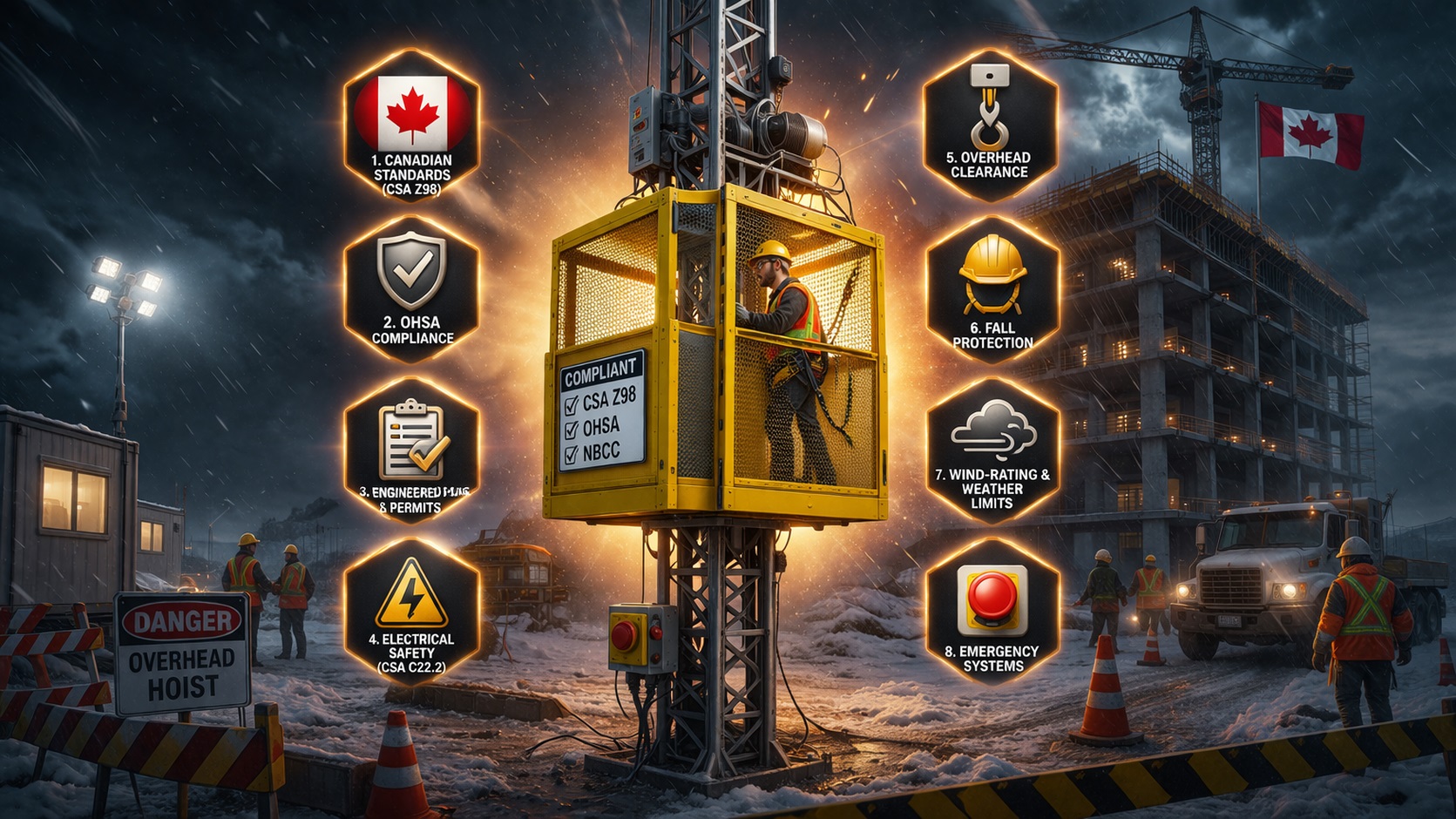
Construction projects across Canada operate under strict occupational health and safety regulations. Provincial authorities enforce clear standards for the installation, inspection, and operation of lifting equipment. A non-compliant system can trigger stop-work orders, fines, and serious liability exposure. Every hoist for building construction must meet defined regulatory and engineering requirements before it becomes operational on site.
Compliance is not simply a documentation exercise. It directly protects workers, project timelines, and contractual commitments. Working with the best construction hoist suppliers in Canada helps ensure that equipment aligns with current codes and provincial safety regulations from the outset.
1. Proper Installation and Engineered Anchoring
A building construction hoist must be installed in accordance with the engineered drawings and manufacturer specifications. Mast sections require precise alignment and secure tie-ins at defined intervals. Improper anchoring increases vibration, structural stress, and risk of instability. Certified installers and documented engineering calculations are mandatory for code compliance.
2. Certified Load Capacity Verification
Load capacity ratings must be clearly displayed and supported by manufacturer certification. A hoist used in building construction cannot operate beyond its rated limits. Provincial safety regulations require verification of structural integrity and safe working load. Selecting equipment through the best construction hoist suppliers in Canada helps confirm that certified documentation is accurate and up to date.
3. Overspeed Governors and Emergency Braking Systems
Modern hoists must include overspeed governors and automatic braking mechanisms. These systems engage if the car exceeds safe operating speed. A compliant hoist for building construction incorporates redundant braking devices designed to stop uncontrolled descent. Functional testing is required before commissioning and during routine inspections.
4. Overload Protection Mechanisms
Overload protection systems prevent operation when the weight exceeds the rated capacity. This safeguard reduces mechanical strain and structural risk. A properly specified hoist for building construction includes calibrated sensors that trigger alarms or disable movement when limits are breached.
5. Door Interlocks and Access Controls
Landing gates and car doors must include interlock systems that prevent movement when doors are open. A compliant hoist for building construction ensures travel is permitted only when access points are secured. This requirement protects personnel and meets provincial safety codes.
6. Electrical Safety and Fail-Safe Controls
Electrical systems must comply with Canadian electrical standards. Emergency stop buttons, grounding systems, and fail-safe circuits are essential. A hoist for building construction must include protective devices that isolate power during faults. Documentation of electrical testing supports regulatory approval.
7. Routine Inspection and Maintenance Records
Regulations require documented inspections before use and at scheduled intervals. Maintenance logs must reflect servicing, component checks, and corrective actions. A compliant hoist for building construction includes structured inspection procedures, supported by leading construction hoist suppliers in Canada, who provide technical documentation and service support.
8. Certified Operator Training and Site Procedures
Only trained and authorized personnel should operate hoists. Certification records and clear operating procedures reduce misuse and mechanical strain. A safe hoist for a building construction program includes operator instruction, emergency response planning, and documented safety briefings.
Compliance Protects Your Timeline
Meeting these eight standards reduces shutdown risk and strengthens site safety performance. A fully compliant building construction hoist supports uninterrupted progress and regulatory confidence. Partnering with the best construction hoist suppliers in Canada ensures equipment reliability, accurate documentation, and code compliance.
UCEL Inc. delivers engineered construction hoists designed to meet strict Canadian and U.S. safety requirements. Protect projects from compliance failures and costly shutdowns. Contact UCEL Inc. today to secure certified, dependable vertical transport solutions.
Share on social media:
Related Post
31
Dec
2025
Rain Gauge Calibration Made Easy for...
Accurate rainfall data enables better decisions in construction planning, water management, agriculture,...
- Business
- 212 Views
18
Nov
2025

Common Mistakes to Avoid When Selecting...
Selecting a masterbatch provider seems straightforward, yet many companies make expensive mistakes...
- Business
- 270 Views