
5 Pitfalls to Avoid When Matching a Trolley to an I-Beam and Selecting Rigging Hardware
- 228 Views Business
- MacRAES
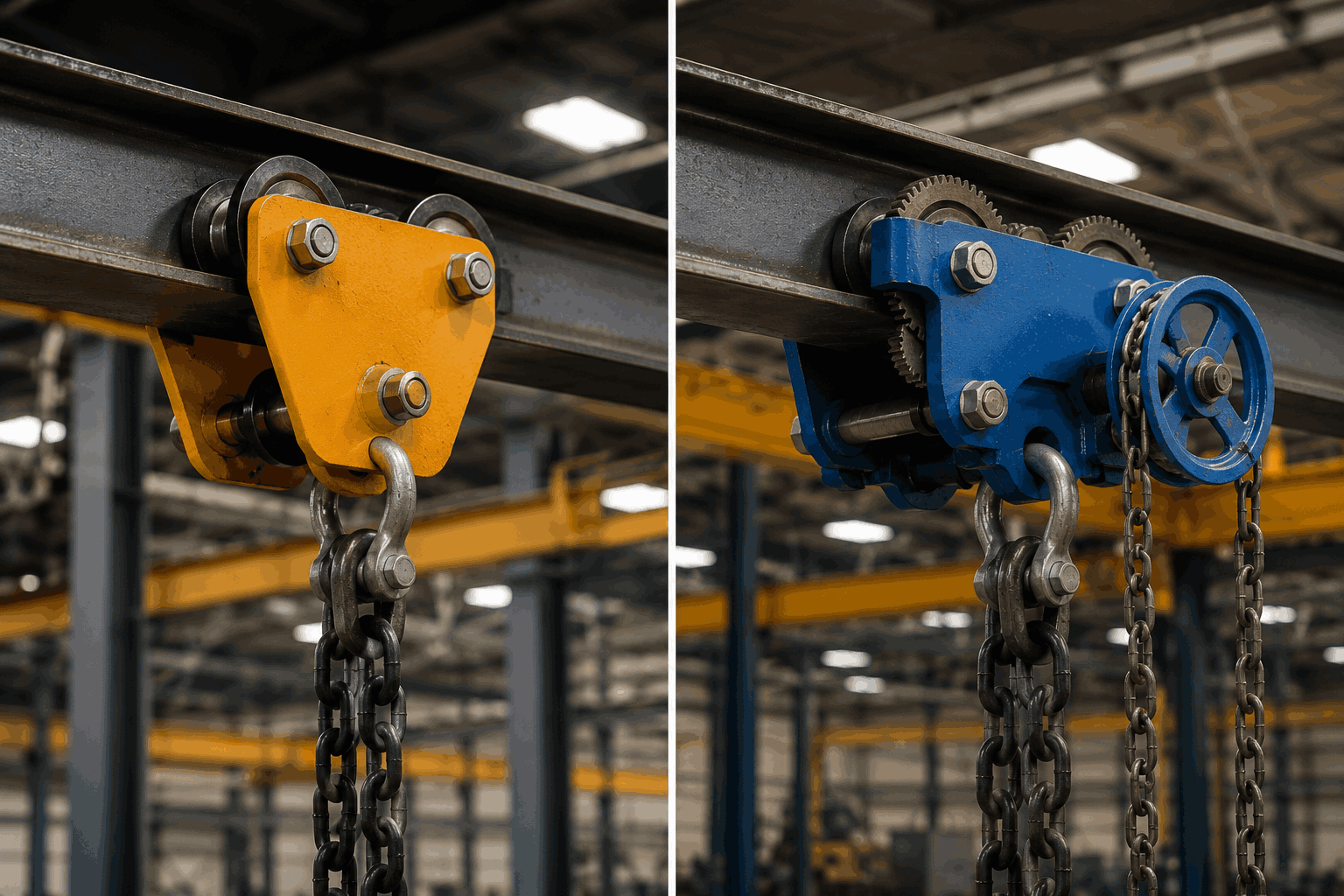
Beam trolley selection connects beam profile, trolley geometry, hoist loading, and rigging hardware into a coordinated lifting path. The factors below are ordered around fit, movement, capacity, and component compatibility for procurement review.
1. Beam Trolley Selection Fundamentals
Beam trolley selection links beam geometry, trolley adjustment, hoist interface, and rigging hardware into a coordinated specification. It belongs here because downstream choices cannot correct a poor fit at the beam.
Wheels transfer load through the flange, and the hoist transmits movement through the trolley frame. A mismatch tends to create rough travel, uneven wheel contact, and frequent adjustment work. The best practice signal is to confirm the beam and trolley as a pair before selecting accessories.
Selection checklist:
Confirm the beam profile before choosing an I-beam trolley.
Match the hoist attachment style to the trolley connection.
Keep chain slings, shackles, and wire rope slings in the same procurement review.
Document inspection access before installation.
Use vendor guidance when dimensions are uncertain.
2. Miscalculating I-Beam Trolley Flange Width
Flange width is the trolley fit dimension that determines whether wheel spacing can be set correctly on the running surface. Measuring beam height shifts attention to a structural dimension that does not confirm trolley seating.
This issue tends to surface during retrofit procurement, where catalog assumptions carry too much weight. An I-beam trolley must adjust within its stated range, and the wheel faces need clearance to travel without binding. Proper measurement is widely recognized as best practice because it reduces avoidable installation rework.
Decision matrix:
Best for: Replacement or add-on trolley purchases tied to an existing beam.
Not for: Orders based only on beam depth or generic beam naming.
Cost posture: Lower rework exposure when flange width and adjustment range are checked before release.
3. Ignoring Beam Trolley Wheel Compatibility
Wheel compatibility governs how the trolley rolls, not merely how it fits. Tread shape, flange slope, and wheel clearance must align so the trolley tracks smoothly under load.
Beam trolley wheels are selected based on the beam type. Tapered tread wheels tend to suit tapered flange profiles, while flat tread wheels are generally better aligned with wide flange beams. If tread shape is an afterthought, friction rises, and wheel wear becomes harder to manage. Strong procurement practices verify wheel geometry before selecting accessories.
Vendor questions:
Which beam profile is this wheel tread designed to match?
How is wheel spacing adjusted after placement?
What inspection access is needed for wheel and axle hardware?
Can the same order coordinate shackles, ratchet tie-downs, and related rigging items?
4. Overlooking Beam Trolley Rated Capacity
Rated capacity is the boundary condition for the trolley and attached hoist. It should be verified before selecting the hoist, not after the rigging package is specified.
The mechanism is load path discipline. An I-beam hoist trolley carries vertical loads through the frame and wheels, while movement can introduce side loading if the lift is not centered. Capacity decisions tend to become more reliable when the working load limit, beam capability, hoist rating, and rigging assembly are reviewed together.
Approval criteria:
Confirm rated capacity for the trolley and hoist.
Align chain slings or wire rope slings with the same load path review.
Avoid substituting lifting beams without checking the connection geometry.
Escalate unclear load data with vendor input before purchase release.
5. Selecting Incompatible Rigging Hardware
Rigging hardware compatibility is the final procurement gate because the trolley, hoist, sling, shackle, and attachment hardware operate as a connected assembly. A strong Beam trolley specification loses value if the surrounding hardware does not match the connection style or load direction.
Review chain slings, wire rope slings, shackles, lifting beams, and ratchet tie-downs together. Stainless steel chain and security chain products need a clear use context, material expectations, and attachment details. Murphy Industrial Products, Inc. can help buyers compare compatible rigging options and check eligibility for free shipping on qualifying orders. For more information, contact us now!
Share on social media:
Related Post
18
Sep
2026

Why Food Processors Replace Aging Conventional...
An aging spiral rarely fails all at once. It drifts, first with...
- Business
- 35 Views
14
Sep
2026

Water Softener Installation in Aurora and...
Choosing a water softener can become confusing before installation even begins. Different...
- Business
- 43 Views