
How Rack-and-Pinion Lifts Compare to Traction Elevators for Industrial Sites
- 223 Views Business
- MacRAES
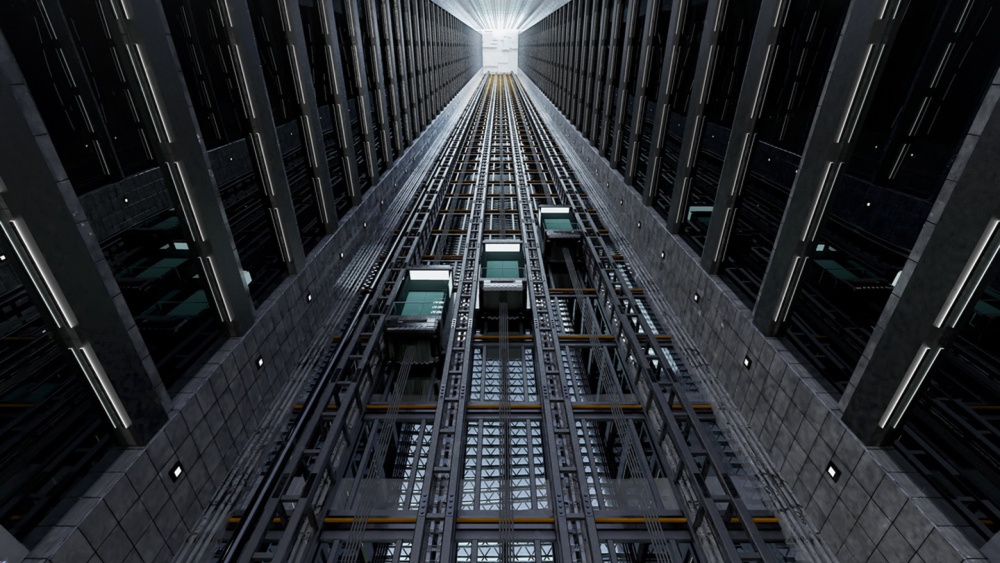
Selecting the right industrial elevator lift directly shapes site safety, operational continuity, and long-term maintenance burden. Rack-and-pinion systems and geared traction elevators represent two distinct engineering philosophies, each suited to different facility conditions and project constraints. Understanding where each mechanism performs reliably and where it introduces risk is the foundation of a sound procurement decision. Rack-and-pinion designs mount externally along a mast structure, while traction systems depend on enclosed hoistways and counterweight assemblies.
For procurement managers and plant engineers evaluating industrial elevators in construction, energy, or heavy manufacturing environments, differences in deployment complexity, environmental tolerance, and lifecycle costs are operationally significant. Choosing the wrong system for a given site profile exposes you to rework, compliance risk, and unplanned downtime, making this comparison a critical step before committing capital.
How an Industrial Elevator Lift Compares During Installation
Installing a traction elevator requires a completely enclosed hoistway, a dedicated machine room, and precise structural integration. These conditions are often difficult to achieve on active industrial or construction sites. As a result, significant lead time and structural modification costs can be incurred before the elevator is operational. In contrast, rack-and-pinion industrial lifts are mounted externally along a guide mast that can be anchored to an existing facade, scaffold, or structural frame, without the need for a sealed shaft.
This exterior configuration reduces civil preparation work and accelerates deployment materially compared to traction alternatives. For sites with open structural frameworks, irregular building profiles, or phased construction timelines, the rack-and-pinion approach consistently delivers faster mobilization. Traction systems offer a cleaner mechanical footprint once installed in purpose-built facilities, but their upfront installation complexity makes them a poor fit for sites without enclosed hoistways. The installation posture of each system is, therefore, a primary differentiator before any performance comparison begins.
Performance and Durability of an Industrial Elevator Lift
Rack-and-pinion industrial lifts are engineered to operate reliably in exposed, harsh environments, including high-wind facades, offshore structures, and heavy industrial facilities where dust, moisture, and temperature variation are constant. The drive mechanism engages directly with a toothed rack, providing positive mechanical engagement that does not depend on rope tension or counterweight balance. Variable frequency drives further refine motion control, delivering smooth starts and stops that reduce mechanical stress on both the equipment and the load.
Traction elevator systems, by comparison, operate with high precision and low noise in climate-controlled, protected indoor environments, where rope and sheave integrity can be consistently maintained. In exposed or semi-exposed conditions, traction systems require more frequent maintenance, primarily due to rope degradation and sheave wear. For industrial lifts operating on tall structures or in corrosive atmospheres, the rack-and-pinion drive presents a materially lower risk of unplanned failure. Traction systems retain an advantage in smooth, high-cycle indoor vertical transport where environmental stressors are minimal.
Verdict: Which Industrial Elevator Lift Fits Your Project
Exposed facilities, construction sites, and industrial environments with variable structural configurations align most reliably with rack-and-pinion industrial lifts. The rugged drive mechanism, external mounting flexibility, and tolerance for harsh conditions make this system the lower-risk choice where environmental exposure is a factor. Protected indoor facilities with stable climate conditions and pre-built hoistways may find that geared traction capabilities meet their requirements with a lower operating noise profile.
The decision ultimately rests on site conditions, structural availability, and the environmental exposure the lift will face across its service life. Buyers who delay this evaluation risk specifying a system that requires costly retrofitting or generates compliance gaps under applicable safety standards. UCEL Inc. has supported engineering decisions for industrial lift applications since 1963, offering both rental and sales services, along with project support, from partners whose equipment meets ISO, ANSI, TUV, and CSA standards. Consulting with UCEL Inc. before finalizing specifications ensures the selected system aligns with both operational demands and verified safety requirements. Contact us now!
Share on social media:
Related Post
27
Aug
2026

Switching Packaging Suppliers: The Questions Growing...
Changing packaging suppliers is not a decision most businesses make lightly. There's...
- Business
- 35 Views
03
Aug
2026

How Square vs Round Commercial Pans...
Franchise pizza programs depend on uniform crust character across every location, and...
- Business
- 109 Views