
Why Food Processors Replace Aging Conventional Spirals With Positive Drive Technology
- 11 Views Business
- MacRAES
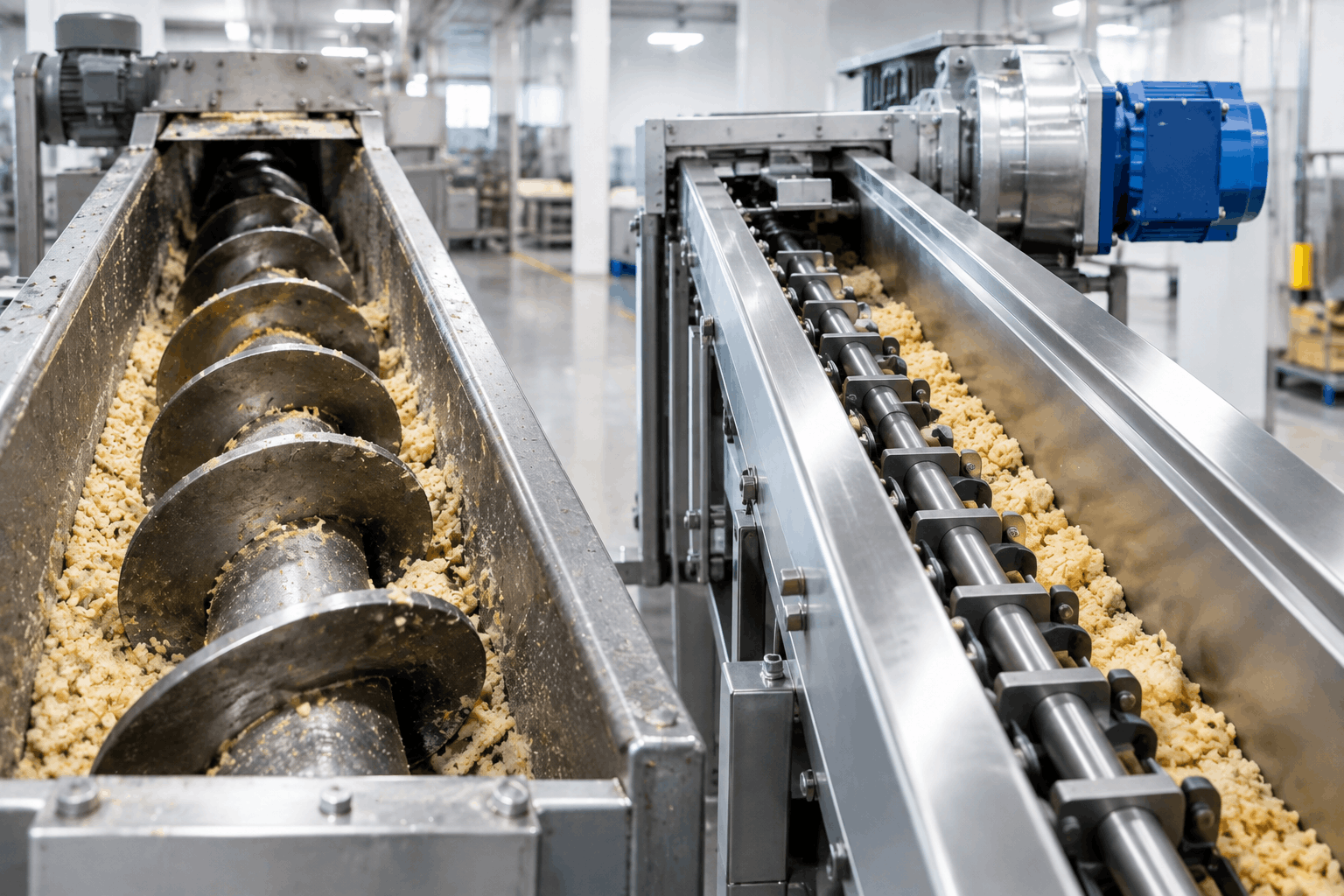
An aging spiral rarely fails all at once. It drifts, first with a belt that tracks poorly, then with more frequent stops, then with a throughput ceiling the plant has quietly outgrown. Left alone, an unreliable freezer at the center of a line puts every shift at risk. This is why a spiral freezer replacement moves up the priority list for high-volume producers. This blog explains the warning signs, how Positive Drive technology differs, and how to plan an upgrade with your manufacturer before downtime forces the decision.
Signs a Conventional Slip Drum Spiral Is Nearing Its Limits
Conventional slip drive spirals remain a large and viable market, and the technology has been established in food plants since the 1960s. The cage provides the main drive and holds the belt edge in tight contact, so friction carries the belt through the system, while an auxiliary drive sets the belt speed. That friction is also the weakness. Over years of cold, continuous operation, a slip drive shows its age through poor belt tracking, rising tension, and the costly belt flips that friction-driven designs are prone to. When a spiral needs more frequent attention to keep the belt running true, it is signalling that a conventional spiral freezer replacement deserves serious thought. Acting on those signals early keeps a small problem from turning into a stopped line.
Production Growth That Outpaces Existing Freezer Capacity
Capacity is often the real trigger. A freezer sized for yesterday’s volume becomes a bottleneck as demand rises, and capacity depends on how much heat must be removed rather than how many units pass through. This is a familiar problem, where an old conventional spiral freezer turns unreliable and too small for growing production demands. When a plant’s output grows past what the existing freezer can hold, the line either slows to match the freezer or the freezer has to change. Slowing the line wastes the capacity a plant has already paid for upstream, so the freezer becomes the piece that has to move. For food processors in this position, CONOVEY recommends replacing the aging spiral with Positive Drive System technology.
How Positive Drive Differs From Friction-Based Systems
Positive Drive technology works on a different principle than slip drum operation. Extended tabs on the inside edge of the spiral chain engage mating pusher bars on the spiral cage, which provides a positive chain drive rather than relying on friction to move the belt. The belt behaves like a timing gear, so it advances smoothly with no pulse or stutter, and product stays firmly in rows through the spiral. The system suits both new builds and upgrades to older slip drive spirals, and it works especially well with oily products that cause tracking problems on friction-driven belts. Because the drive no longer depends on friction, the belt no longer fights the cage to move, which is the root of many problems an aging slip drive develops.
Lower Belt Tension and the End of Costly Belt Flips
The positive chain drive spreads load evenly along the whole belt path, so overall system tension runs roughly fifty percent lower than a conventional slip drive. Lower tension reduces stress on the belt and supports heavier product loads without strain. It also eliminates the costly belt flips that friction-driven spirals require, which removes a recurring maintenance headache from the plant’s schedule. Up-running Positive Drive spirals need only a single cage motor and variable frequency drive, so the mechanical package stays simple while reliability improves. For a plant weighing a conventional spiral freezer replacement, that combination of lower tension and fewer belt flips is often what makes the numbers work.
Planning a Retrofit Around Existing Line Constraints
Most spirals are replaced inside lines that are already running, and physical fit is the first constraint. An existing building has fixed ceiling height, columns, and utility routing, so the new spiral has to be designed to work within those limits. CONOVEY offers a range of configurations, including super-tight radius options and spiral-at-inlet or side arrangements, which help thread a new system into the space available. Trained technicians handle the conversion from an older slip drive spiral to the Positive Drive system, and the upgrade can pay for itself over time. The retrofit also has to synchronize with the established process and packaging line, so the infeed matches line speed and the discharge hands off cleanly to what follows.
Improving Reliability for High Volume Frozen Production
Reliability is the payoff that matters most on a high-volume line. A converted spiral gains lower belt tension, smoother product movement, and better reliability, especially on oily products that struggle on friction drives. The self-synchronizing action of the Positive Drive belt keeps it running smoothly and product firmly in rows, which protects freeze consistency across long runs. It also handles heavier loads and needs very little maintenance, so the line spends more time producing and less time stopped for service. Every day of downtime carries real cost, and a more reliable freezer directly protects output and the quality the line depends on.
Evaluating a Spiral Freezer Upgrade With Your Manufacturer
A well-planned retrofit minimizes interruption by pre-assembling and testing as much as possible before the line is stopped. The upgrade should be brought up to full performance and validated for throughput and freeze consistency before the line returns to full production. This is where spiral freezer manufacturers’ custom-engineering expertise becomes practical: the right partner matches drive technology, belt, and configuration to the line the spiral will serve, rather than forcing a fixed design onto it. After-sales support matters just as much, since access to spare parts, preventive maintenance, and responsive service keeps the new spiral performing for years.
In the end, the decision comes down to timing. Waiting until an aging spiral fails outright turns a planned project into an emergency, while evaluating the upgrade early keeps the choice, the schedule, and the cost in your hands. CONOVEY engineers Positive Drive replacements around each plant’s product, throughput, and space across its range of spiral conveyors for food processing and packaging operations. Contact CONOVEY to evaluate a conventional spiral freezer replacement engineered around your product, throughput, and plant.
Share on social media:
Related Post
14
Sep
2026
Water Softener Installation in Aurora and...
Choosing a water softener can become confusing before installation even begins. Different...
- Business
- 24 Views
27
Aug
2026
Switching Packaging Suppliers: The Questions Growing...
Changing packaging suppliers is not a decision most businesses make lightly. There's...
- Business
- 72 Views